If you’re looking to strengthen your lower legs, improve balance, and sculpt lean muscles, there’s one exercise that stands out — one leg calf raises. This simple yet powerful move targets your calf muscles, helping you build strength, stability, and symmetry. Whether you’re an athlete aiming for explosive performance, a fitness beginner trying to tone your legs, or just someone wanting to walk and run better, this exercise can make a big difference.
Unlike standard two-leg calf raises, one leg calf raises demand more control and balance, activating not just your calves but also your core and stabilizer muscles. The beauty of this move lies in its simplicity — no fancy equipment, no complicated setup, just your body weight and consistency.
In this complete guide, you’ll learn everything about one leg calf raises — their benefits, proper technique, variations, mistakes to avoid, and how to add them to your workout routine.
What Are One Leg Calf Raises?
One leg calf raises (also known as single-leg calf raises) are a bodyweight exercise where you stand on one leg and lift your heel off the ground, raising your body upward using the calf muscles. It primarily strengthens the gastrocnemius and soleus muscles, which are responsible for foot movement, jumping, and running.
Muscles Targeted
- Gastrocnemius: The large, visible calf muscle that gives shape and definition.
- Soleus: A deeper muscle that provides stability and endurance.
- Tibialis posterior: Assists with foot support and balance.
- Core and ankle stabilizers: Help maintain posture during the exercise.
Why One Leg Instead of Two?
Performing the exercise one leg at a time ensures balanced muscle development. Many people have one leg stronger than the other, and single-leg training helps correct that imbalance. It also improves coordination and isolates each calf muscle for deeper activation.
Benefits of One Leg Calf Raises
Incorporating one leg calf raises into your routine brings a range of fitness benefits that go far beyond aesthetics.
1. Builds Strength and Muscle Definition
This exercise directly targets your calf muscles, helping you build strength, definition, and endurance. Over time, it improves lower leg aesthetics and athletic performance.
2. Enhances Balance and Stability
Standing on one leg requires control. Your stabilizing muscles, including your core and ankles, work hard to keep you balanced — improving overall coordination.
3. Improves Athletic Performance
For runners, dancers, and athletes, strong calves mean faster sprints, higher jumps, and better agility. The one leg calf raise trains both power and endurance.
4. Boosts Ankle Mobility and Strength
This exercise strengthens the muscles around the ankle joint, reducing the risk of injuries such as sprains. It also enhances flexibility and mobility in your lower legs.
5. Corrects Muscle Imbalance
Most people naturally rely more on one leg. One leg calf raises train each side equally, improving symmetry and preventing uneven muscle development.
6. Improves Posture and Foot Health
By strengthening your lower legs and stabilizing your feet, this move helps maintain proper posture and supports your arches — ideal for those who stand or walk for long periods.
How to Do One Leg Calf Raises Correctly
To get the most out of your workout and avoid injury, proper form is essential.
Step-by-Step Instructions
- Stand Tall: Stand upright on one foot, keeping your other foot slightly off the ground.
- Engage Your Core: Tighten your core to maintain stability and keep your spine straight.
- Lift Slowly: Push through the ball of your standing foot to lift your heel as high as possible.
- Pause at the Top: Hold the raised position for 1–2 seconds, feeling your calf contract.
- Lower Down with Control: Slowly return your heel to the ground, avoiding a hard drop.
- Repeat: Perform 12–15 reps, then switch legs.
Pro Tips for Perfect Form
- Keep your movement controlled—avoid bouncing.
- Focus on full range of motion (lift high, lower fully).
- Maintain steady breathing throughout each repetition.
- Use a wall or chair for balance if needed, especially for beginners.
Variations of One Leg Calf Raises
Changing up your technique helps target muscles differently and keeps your workouts interesting.
1. Weighted One Leg Calf Raises
Hold a dumbbell or kettlebell in one hand for added resistance. This increases intensity and muscle growth.
2. Elevated One Leg Calf Raises
Perform the exercise on a step or raised platform. This allows for a deeper stretch at the bottom and a greater range of motion.
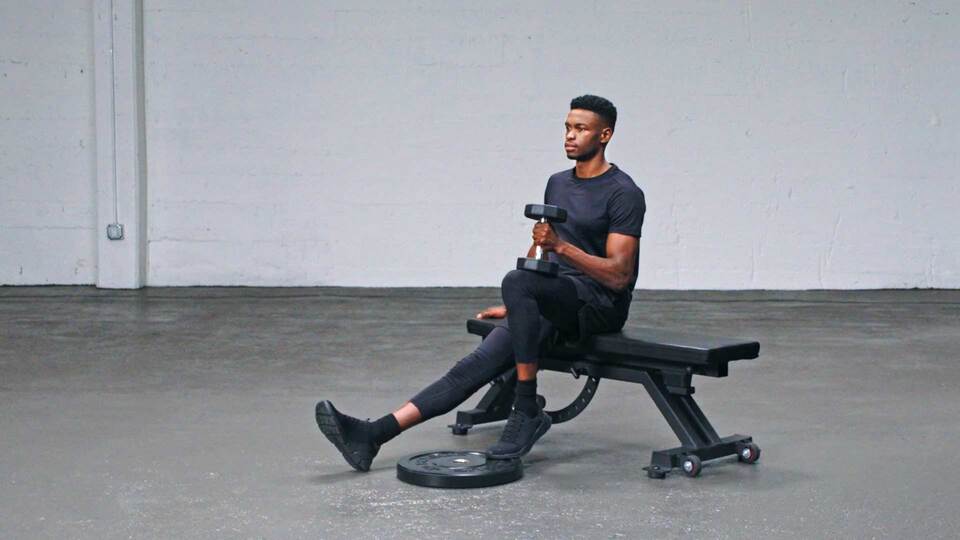
3. Seated One Leg Calf Raises
Sit on a chair or bench with one foot flat on the floor. Lift your heel off the ground and lower it back down. This variation focuses more on the soleus muscle.
4. Resistance Band Calf Raises
Place a resistance band around your toes and press against it while performing the movement. This adds progressive resistance.
5. Slow Eccentric Calf Raises
Raise your heel quickly, but lower it very slowly (3–5 seconds). This improves muscle control and endurance.
Common Mistakes to Avoid
Even though one leg calf raises look simple, many people make small errors that limit results.
1. Bouncing Too Fast
Using momentum reduces muscle engagement. Always move slowly and deliberately.
2. Partial Range of Motion
Lifting only halfway doesn’t fully activate your calf muscles. Make sure to go all the way up and down.
3. Neglecting the Stretch
Don’t rush the downward phase. A controlled stretch at the bottom helps build flexibility and strength.
4. Poor Balance or Posture
If your body wobbles excessively, it means your core isn’t engaged. Focus on tightening your abs and keeping your body straight.
5. Skipping the Weaker Leg
Most people tend to favor their stronger side. Always start with your weaker leg to ensure balanced development.
How to Add One Leg Calf Raises to Your Workout Routine
This versatile exercise can fit into almost any workout plan.
For Beginners
- 2–3 sets of 10–12 reps per leg
- Perform 3–4 times a week
- Use bodyweight only and hold a wall for support
For Intermediate Level
- 3–4 sets of 12–15 reps per leg
- Add light weights or perform on an elevated surface
- Combine with squats and lunges for a full lower-body workout
For Advanced Athletes
- 4–5 sets of 15–20 reps
- Use heavy weights or resistance bands
- Try slow eccentric movements for maximum intensity
Integration Tip
Do calf raises at the end of your leg workout or as part of your functional training routine to enhance balance and athleticism.
Combining One Leg Calf Raises with Other Exercises
For complete lower body strength, pair one leg calf raises with other effective movements:
1. Squats
Squats target your quads, hamstrings, and glutes. Combined with calf raises, they deliver a full leg workout.
2. Lunges
Add lunges for balance and unilateral strength to complement your calf work.
3. Jump Rope
Skipping improves calf endurance, making it an excellent warm-up or finisher.
4. Step-Ups
Performing step-ups on one leg improves coordination and enhances calf activation.
5. Plyometric Box Jumps
These explosive movements strengthen your calves while training for speed and power.
Calf Raise Workout Plan Example
Here’s a weekly sample routine for beginners to advanced levels:
Day 1 – Basic Strength
- One Leg Calf Raises – 3 sets of 12 reps
- Bodyweight Squats – 3 sets of 15 reps
- Lunges – 2 sets of 10 reps per leg
Day 2 – Balance & Mobility
- Elevated One Leg Calf Raises – 3 sets of 10 reps
- Step-Ups – 3 sets of 10 reps
- Resistance Band Calf Raises – 2 sets of 15 reps
Day 3 – Power & Endurance
- Weighted Calf Raises – 4 sets of 12 reps
- Jump Rope – 2 minutes
- Slow Eccentric Calf Raises – 3 sets of 8 reps
This combination targets your calves from all angles, ensuring complete development and long-term strength.
One Leg Calf Raises for Runners and Athletes
Athletes rely on their calves for speed, stability, and shock absorption. One leg calf raises play a major role in improving these aspects.
Benefits for Runners
- Boosts stride power and running efficiency
- Reduces risk of shin splints and foot injuries
- Improves ankle control during long runs
Benefits for Jumpers and Dancers
- Enhances vertical leap and spring power
- Builds stronger ankles for smoother landings
- Improves endurance during long performances
Recovery and Stretching After Calf Training
Recovery is as important as the workout itself. Tight calf muscles can lead to stiffness or strain if not stretched properly.
Post-Workout Stretches
- Wall Calf Stretch: Place your hands on a wall, step one foot back, and gently press your heel into the ground. Hold for 30 seconds per leg.
- Seated Towel Stretch: Sit down, wrap a towel around your foot, and pull gently toward you.
- Foam Rolling: Use a foam roller to massage tight areas and improve blood flow.
Recovery Tips
- Stay hydrated to prevent cramps.
- Rest at least 24 hours between intense sessions.
- Massage or use a warm compress for soreness.
Frequently Asked Questions About One Leg Calf Raises
1. How often should I do one leg calf raises?
3–4 times a week is ideal for strength and definition.
2. Can beginners do this exercise?
Yes! Start with bodyweight and hold onto a stable surface for balance.
3. Do I need weights?
Not necessarily. You can start with bodyweight and add weights later for more resistance.
4. How long until I see results?
With consistency, you’ll notice improved strength and tone within 4–6 weeks.
5. Can I do them every day?
It’s better to rest between sessions to let muscles recover and grow.
6. Do one leg calf raises help with running?
Absolutely! They improve power, stability, and lower leg endurance.
7. Should I go barefoot or wear shoes?
Barefoot training improves balance and activation, but supportive shoes are fine too.
Conclusion
One leg calf raises may look simple, but they’re one of the most effective exercises for developing strength, balance, and power in your lower legs. They engage not only your calves but also your stabilizers and core, improving coordination and posture.
Whether you’re a fitness beginner or a professional athlete, adding this exercise to your workout routine can help you achieve stronger, leaner, and more balanced legs.